
Jun 02, 2014
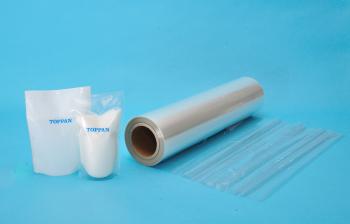
that uses mechanically recycled PET film
Maintains the same oxygen and water vapor barrier performance
as conventional GL Film. Mass production to begin in autumn 2014
■Background to development
Withincreasing focus on environmental issues, such as the reduction of environmentalimpact, preservation of biodiversity, reduction of CO2 emissions, and other measuresto counteract global warming, importance is being placed on the use of recycledresources.
In order tocontribute to the establishment of a recycling-oriented society, ToppanPrinting developed laminated packaging materials produced using mechanicallyrecycled PET in April 2012, and they are sold to customers in the toiletry,food, and pharmaceutical industries. However, due to the characteristics ofrecycled PET film, it was thought to be difficult to produce film with high-barrierperformance.
ToppanPrinting has now successfully developed GL Film that uses mechanically recycledPET film by applying the expertise in vapor deposition and coating technologiesit has accumulated in its business.
■Features of the product
・Uses recycledmaterials but maintains the unique high-barrier performance of GL Film
By using Toppan Printing’s vapor deposition and coatingtechnologies, it has been possible to achieve the same quality as conventionalGL Film in terms of oxygen and water vapor barrier performance.
・17% reductionin CO2 emission volume
Due to the use of mechanically recycled PET film, the volumeof CO2 released during processes up to and including GL Film manufacture isreduced by approximately 17% compared with films produced using non-recycledPET
・Reduction ofuse of non-recycled PET resources
The use of mechanically recycled PET film helps to reducethe use of petroleum-based resources and contribute to the creation of arecycling-oriented society.
■Future targets
*1 GL Film
This is a collective term for originaltransparent vapor deposition high-barrier films developed by Toppan Printing.These films enjoy an excellent reputation in
*2 Mechanically recycled PET
PET bottles are returned to PET resin firstby crushing and cleaning, and then by processes including high-temperaturemelting, decompression, and filtration.
* The names of companies, products, andservices featured in this press release are the trademarks or registeredtrademarks of the respective companies.