
 TOPPAN’s Impact
With digitalization accelerating, semiconductors have become a critical part of the infrastructure supporting industry and our lives. TOPPAN expanded into the electronics domain by applying the microfabrication technologies that it accrued in the printing business launched when the company was founded. Today, TOPPAN develops and manufactures next-generation semiconductor packaging substrates and FC-BGA substrates that meet needs for enhanced LSI (large-sale integration) performance and miniaturization.
The TOPPAN Group is advancing digital transformation (DX) and sustainability transformation (SX), and positions the semiconductor business as a key element of the foundation of its corporate value. While on the one hand performance requirements for semiconductors will be even more demanding going forward, a number of other challenges are also emerging. These include the need to enable a decarbonized society and reduce energy consumption amid increased data traffic and problems with thermal efficiency, as well as issues related to ensuring stability in supply chains. Solutions to these challenges need to be found if the semiconductor business is to continue growing.
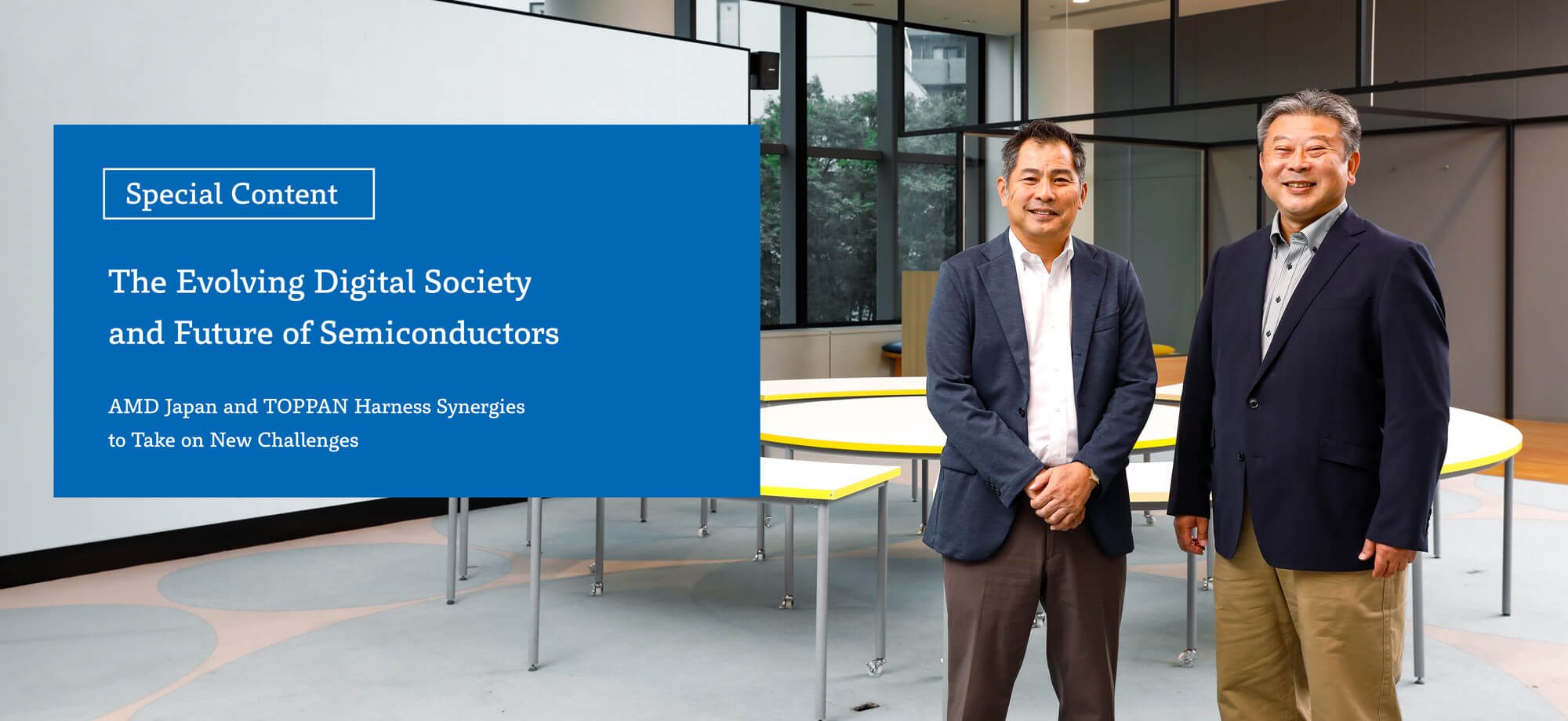
Over the years TOPPAN has proposed various solutions to environmental problems and other social issues. This feature presents a dialogue in which we speak with a representative of AMD Japan, Ltd. (AMD Japan) to look at what the two companies have achieved by working together in the semiconductor business and what they are aiming to accomplish in the future.
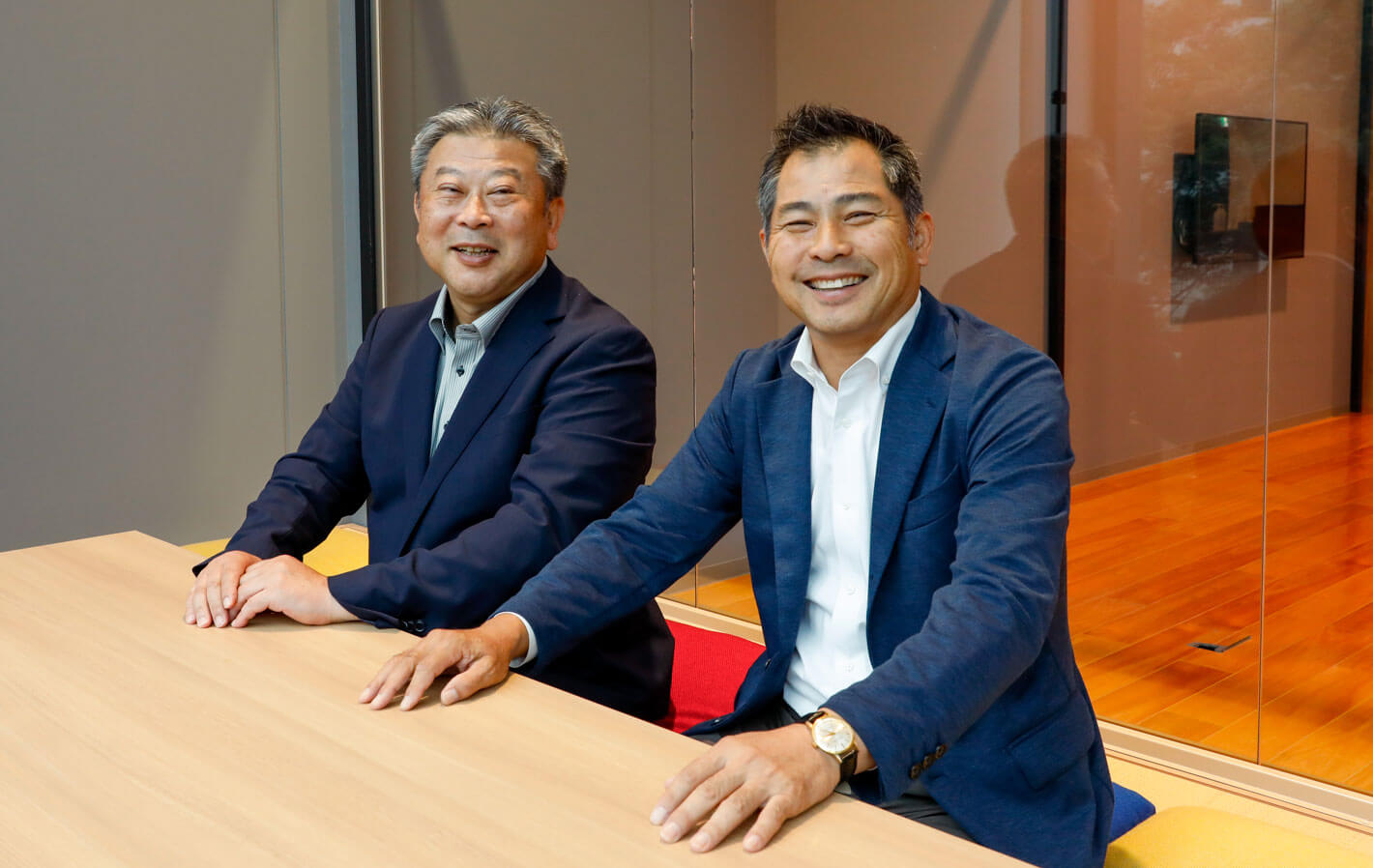
Hajime Saiki (left)
Director
Substrate &
Passive Components TD
Advanced
Technology
AMD Japan, Ltd.
Kenji Okumura (right)
Senior General Manager
Sales Department I
Semiconductor Subdivision
Electronics Division
TOPPAN Inc.
TOPPAN’s electronics business and collaboration with AMD Japan in the semiconductor domain
- Okumura
- TOPPAN’s Electronics business goes back more than 60 years. It started when we began making precision components in 1959 by applying the metal processing expertise we had accumulated in areas such as plating and etching (corrosion), which is an essential part of plate-making for printing. With the growth of the global electronics industry, we subsequently expanded to the fields of printed wiring boards and photomasks for semiconductor circuits.
- When I joined the company in 1990, it was called the Precision Electronics Division, but the following year the name changed to the Electronics Division. Application of printing technologies advanced further in the 1990s in areas such as color LCDs as well, but the circuit board related business existed before that.
- Saiki
- AMD Japan is the Japanese subsidiary of America’s Advanced Micro Devices, Inc. (AMD). We have a sales division and a technical division focused on engineering. AMD Japan was established 50 years ago, but the Japanese market is big, with Japan having a long-established reputation for advanced technology. We have a lot of development partners with outstanding technical capabilities, meaning that Japan is positioned as a core region for AMD.
- I believe our strengths are technical capabilities, which have enabled us to win a large share of the global market, coupled with the advantages of being located in Japan. Many of the suppliers like TOPPAN that manufacture substrates are concentrated in Japan, Taiwan, and other areas of Asia, and a large number of the main manufacturers handling the core materials are also Japanese companies. The advantage of this is that we can reduce time lost by establishing relationships based on close communication between suppliers and AMD Japan, enabling us to discuss the finer points of specifications and make decisions quickly.
- Okumura
- The project for the business with AMD Japan started in 2007. At that time, we had a photomask sales department supporting front-end semiconductor processes in the US, and after consulting with them, we believed that the customer we should engage with to advance the FC-BGA business was AMD, which is a world-class company. We therefore launched a project at TOPPAN and worked towards obtaining supplier qualification.
- Saiki
- The semiconductor field is expected to change further going forward, starting with the supply chain. In that context, we see significant benefits in working with TOPPAN, which has an inventory of knowledge that differs from our own. For instance, TOPPAN is a company that can consistently maintain high quality because of its strengths in manufacturing substrates and handling large panels as an extension of photonics.
Enabling enhanced performance and reducing environmental impact as semiconductor demand expands
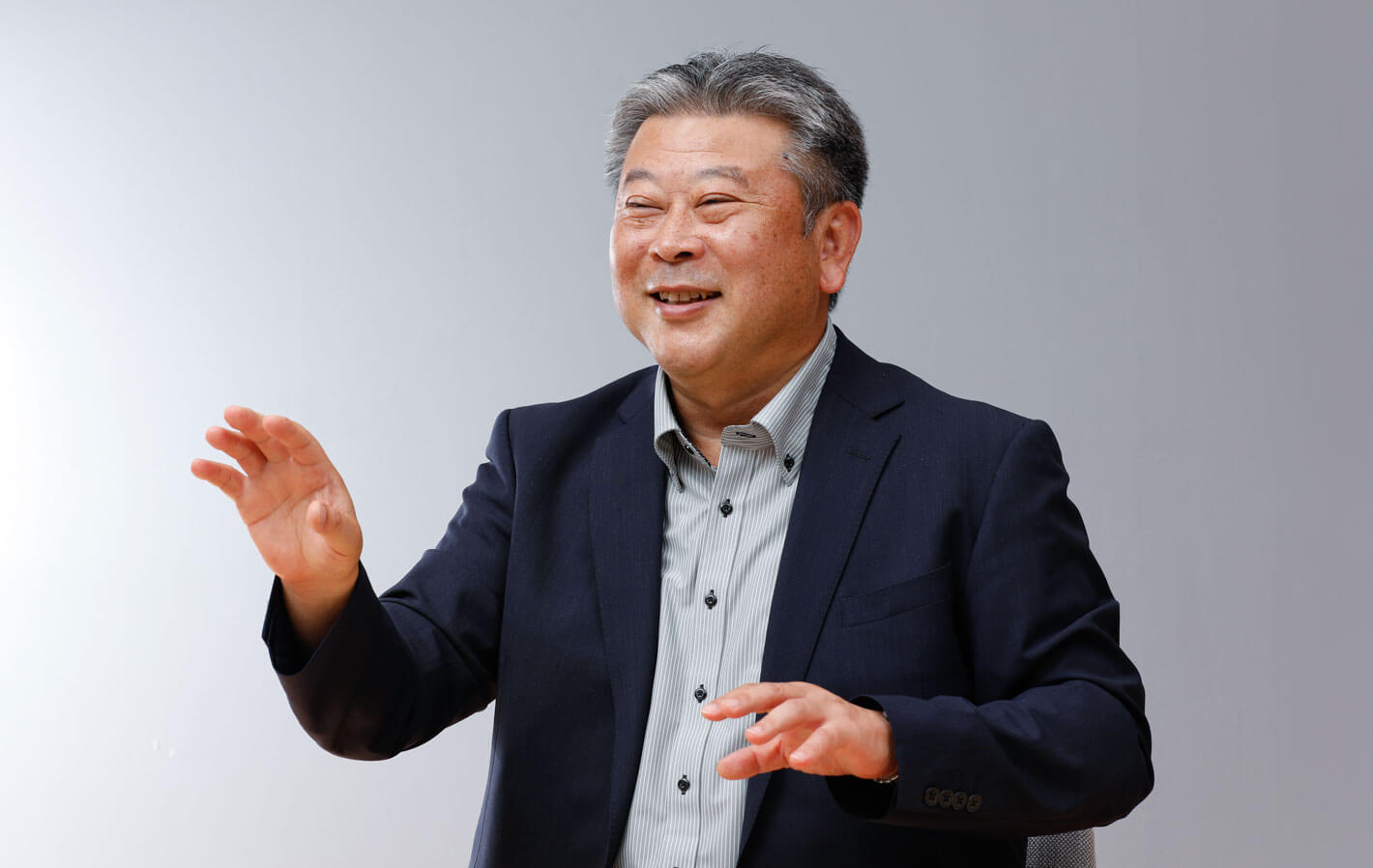
- Saiki
- PCs, smartphones, and other devices that use semiconductors are a vital part of our everyday lives now. However, the industry shares an awareness of the need to reduce the environmental impact of these devices. As everyone is aware, devices that feature semiconductors can heat up and slow down when they are used continuously. It’s like constantly boiling water in an electric kettle. But people won’t use devices if functionality is compromised as a result of efforts to address thermal efficiency. This means that balancing enhanced performance with reduction in environmental impact will be an important factor going forward.
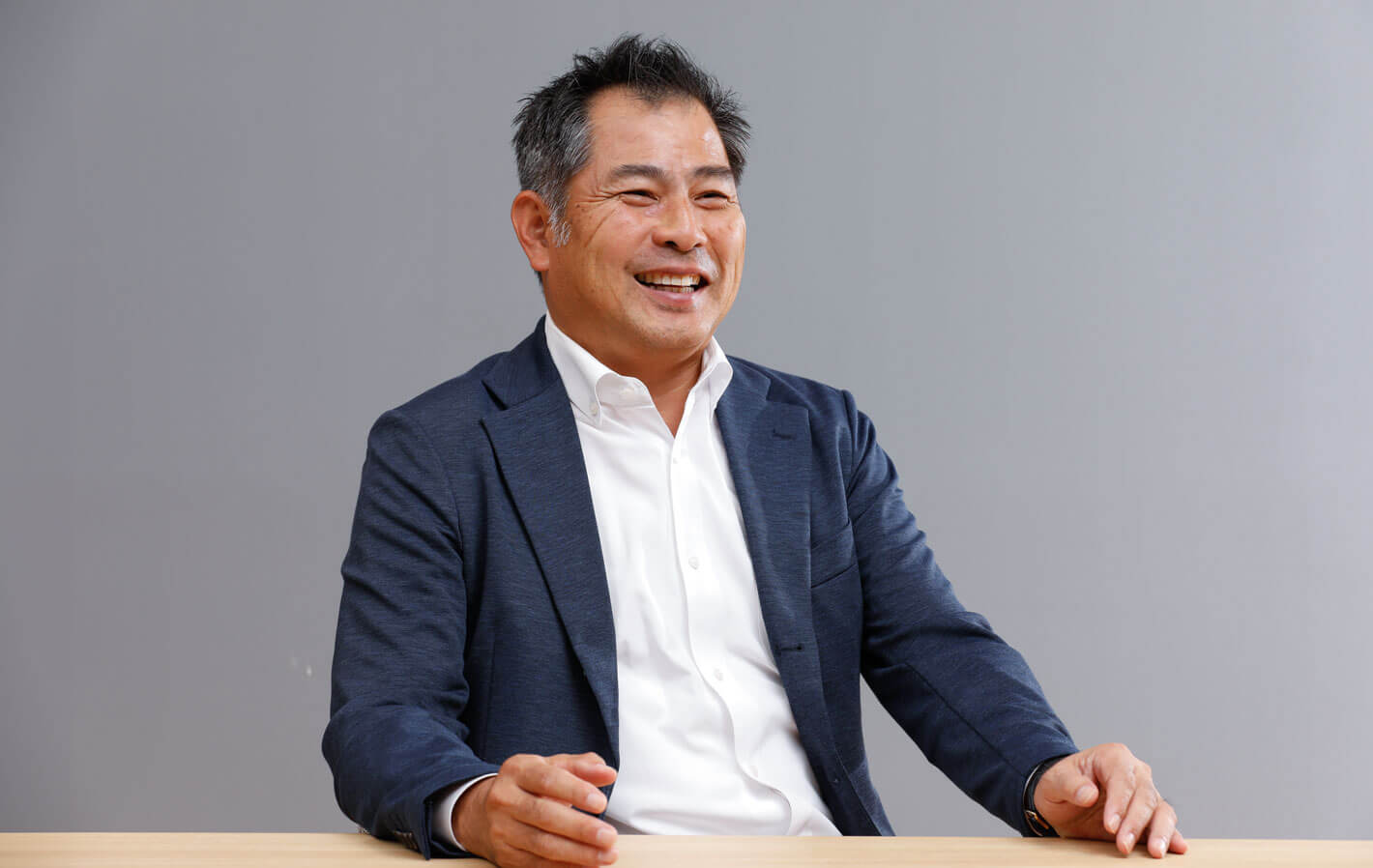
- Okumura
- The growth of AI is remarkable but the data centers supporting it house vast numbers of high-performance GPUs. As you say, it’s just like continuously boiling water in a giant electric kettle.
- In our FC-BGA substrate business, TOPPAN has addressed a number of challenges, such as scaling up size and reducing power consumption. To dial down energy consumption and heat generation at data centers, we want to work hand-in-hand with AMD Japan to drive design innovation, including the composition of materials and substrates.
-
To do that, we are accumulating knowledge on the latest technologies and trends by constantly accessing cutting-edge technology information. Joining the US-JOINT* next-generation semiconductor packaging consortium last year was also part of these efforts. We also want to explore new applications for next-generation semiconductors by leveraging TOPPAN’s track record in diverse businesses, including glass processing and semiconductor front-end processes.
* US-JOINT is a US-Japan consortium for next-generation semiconductor packaging established in July 2024 and spearheaded by Resonac Corporation , a leading manufacturer of semiconductor back-end process materials. TOPPAN joined it in November 2024 as a packaging substrate manufacturer.
https://www.holdings.toppan.com/en/news/2024/12/newsrelease241210_1.html
- Saiki
- Substrates will play an important role in the future growth of AI. The principal challenge is reducing power consumption, and at Japan AMD we also continue to harness our design and packaging capabilities to work on making devices function smoothly without heating up. We believe our 3D packaging and advanced technologies can play a part in the development of more efficient products with longer lives.
Bolstering supply chains and pursuing next-generation semiconductors
- Okumura
- There has been an increasing focus on semiconductor supply chain management in recent years. With the digital transformation gathering pace throughout the world, there was a global shortage of substrates for a period a few years ago, and material costs have continued to rise since the start of the war in Ukraine.
- Although it is difficult to manage the supply chain at the same time as developing technologies geared towards the needs of customers, in my view the crucial challenge is raising yields while the products become larger with more advanced functions.
- Saiki
- From a BCP perspective, AMD Japan procures resin substrates from multiple suppliers in Asia—TOPPAN and several others in Japan as well as a number in Taiwan. The Asian supply chain is undergoing a transformation. This is something that is influenced by the government policies of various countries as well as geopolitical factors, so we need to assess the situation carefully.
- Okumura
- TOPPAN currently only supplies substrates from our plant in Niigata, Japan, but we are launching a new plant in Singapore, which will strengthen our business continuity capabilities. By 2027, we aim to have expanded production capacity in the FC-BGA substrate business to at least 2.5 times the fiscal 2022 level.
- We are also focusing efforts on leveraging TOPPAN’s strengths in glass processing to develop next-generation semiconductor packaging that can help address the heat generation problem we just spoke about and contribute to the commercialization of high-speed semiconductors with multiple functions. Glass-based substrates are superior to conventional organic substrates in terms of having low thermal expansion and being able to accommodate high-density wiring, meaning they can contribute to enhanced performance through chiplet structures and photoelectric fusion technologies. We believe that will enable us to develop high-performance packaging that is also more compact and consumes less energy.
- Saiki
- Because they have been dealing with glass for a long time, TOPPAN has unique strengths in terms of understanding physical properties and processing techniques, so I feel it could become a vital element of the supply chain going forward. AMD Japan is fabless. As such, we value finding partners with whom we can work towards shared goals, creating new technologies, and maintaining close communication. We have been able to enjoy a win-win relationship with TOPPAN for 15 years because they consistently and passionately provide us with proposals aligned to our development policy.
- I’m sure that we are quite demanding sometimes, but TOPPAN always responds with new proposals and solid support. Suppliers who can do that are very valuable, and we hope to sustain this relationship with an important partner. If I’m being greedy, it would be great if TOPPAN had even more capacity (laughs).
- Okumura
- In developing glass substrates, there are a lot of things we can learn from AMD Japan and their cutting-edge technology. TOPPAN’s technical resources and capacity are limited, so I recognize that we can’t satisfy all of AMD Japan’s requirements. But my hope is that we can leverage TOPPAN’s strengths in certain areas to target the same goals and grow together.
- By facilitating a stable semiconductor supply chain, I believe we can contribute to solving some of the major challenges facing Japanese society, such as the labor shortage resulting from an ageing population. To drive growth of the semiconductor business as one of the keys to solutions to social issues, I hope we can continue to strengthen collaboration, absorb a broad range of knowledge, and harness it for our products and services.
* All information is current as of October 2025 (the time of the interview).
The advance of generative AI and high-speed networks is making semiconductors a critical element of our everyday lives, but rapid expansion of semiconductor demand is also bringing with it a number of social issues, such as increased data traffic, waste heat, and the need to reinforce supply chains .
The TOPPAN Group is not just relying on its own knowledge and expertise derived from printing technologies, but also combining strengths with customers to grow businesses that respond to society’s needs and deliver solutions to the challenges it faces.
Comment from the coordinator

Nahomi Funahashi
ESG Communication
Department
Public Relations Division
TOPPAN Holdings Inc.
This is the fifth feature in the special content series and focuses on the business of semiconductors, which have become an indispensable part of our lives in the digital society. Hajime Saiki from AMD Japan joined us for a lively discussion, and I was able to learn about what is happening on the front lines, including the challenges that the industry faces and the new technologies being developed to address them. It brought home the difficulty of delivering business-based solutions to social issues, but also showed me the potential for taking on ambitious challenges in the semiconductor business. The TOPPAN Group will continue to be proactive in tackling new challenges to raise corporate value. Look out for the next feature in the series!